
4 Fragrant Spring-Flowering Bulbs for a Beautifully Scented Garden

Fill your spring garden with beautiful colour and fragrance. Discover four types of scented spring-flowering bulbs, including hyacinths, daffodils, tulips and grape hyacinths, with recommended varieties and practical UK planting advice.
This post may contain affiliate links. Please see the affiliate disclosure for details.
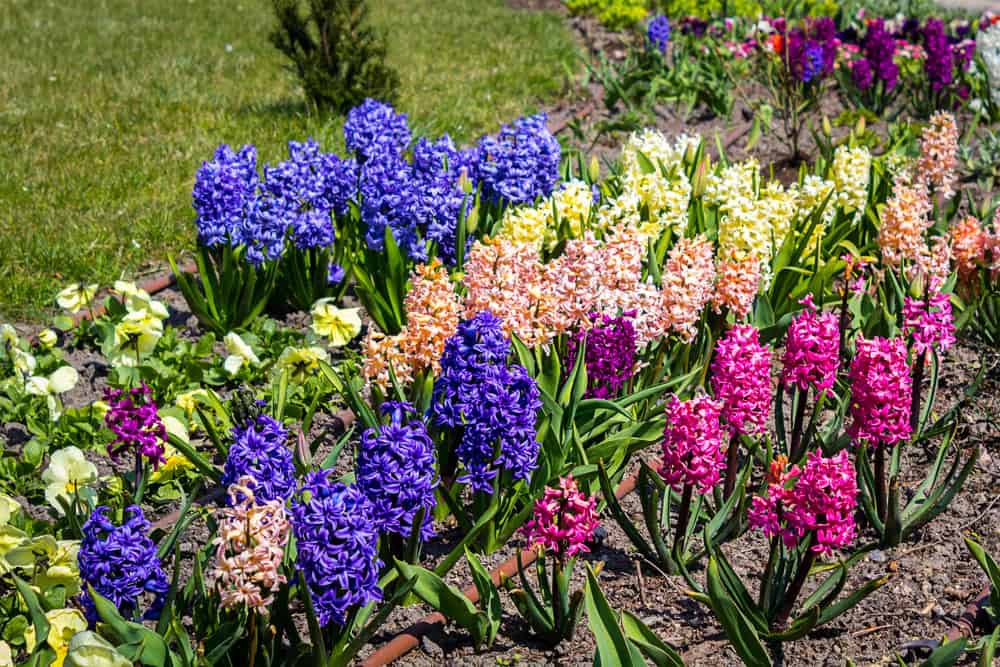
There’s something wonderful about the first flowers of spring. After months of bare borders, grey skies and rather too many muddy gardening jobs, those first splashes of colour are always welcome.
But some spring flowers have another lovely surprise in store: fragrance.
A pot of hyacinths beside the front door, a cluster of scented daffodils or a few carefully chosen tulips can make stepping outside on a sunny spring morning even more enjoyable.
And the best part? Much of the work happens months before the flowers appear.
Plant your bulbs in autumn, give them the right growing conditions, and you can look forward to a beautiful display when the garden begins waking up again.
Not every spring-flowering bulb is fragrant, though. Some have a powerful scent, while others are much more subtle, and certain varieties have little noticeable fragrance at all.
Here are four beautiful types of spring-flowering bulbs worth growing for their scent, including specific varieties to look for and tips to help them thrive in your garden.
Gardening in the UK? Most hardy spring-flowering bulbs are planted in autumn, although the best timing varies by type. Daffodils and hyacinths are usually planted earlier in the season, while November is an excellent time for tulips. Planting times and flowering periods may vary depending on your local conditions.
Why Grow Fragrant Spring-Flowering Bulbs?
Spring bulbs have a wonderful way of making the garden feel alive again.
Just when you begin to wonder whether winter will ever end, the first green shoots push through the soil, followed by flowers that seem all the more beautiful after so long. Adding fragrance makes the experience even better.
They make the most of small spaces
You don’t need a large garden to enjoy scented spring flowers. A few pots beside a doorway, a window box or a narrow border alongside a path can provide plenty of colour and fragrance.
In fact, planting fragrant bulbs somewhere you pass regularly often makes more sense than hiding them at the far end of the garden.
Some scents are best appreciated up close, particularly on warmer, still days.
Some provide early food for pollinators
Spring-flowering bulbs can be valuable to bees and other insects emerging during milder weather. However, not every bulb offers the same benefits.
Flower shape, nectar availability and pollen accessibility all make a difference. Some highly cultivated double flowers may be less useful to pollinators than simpler varieties.
If you want to support wildlife while enjoying scented flowers, include a mix of suitable spring bulbs and other early-flowering plants.
They give you something to look forward to
Autumn bulb planting is one of those gardening jobs that feels like a little investment in the future. You can spend an afternoon planting bulbs as the garden begins to wind down, then largely leave them alone until spring.
There’s something quite satisfying about seeing those flowers appear months later, especially when you’ve almost forgotten exactly where you planted them.
And while some bulbs need replacing occasionally, many can return and flower for years when they’re happy with their growing conditions.
How to Plant Spring-Flowering Bulbs
Before choosing your scented bulbs, it’s worth understanding a few basics. Most are relatively straightforward to grow, but getting the planting right will affect how well they establish and flower.
Choose a spot with good drainage
One thing many spring bulbs dislike is sitting in waterlogged soil through winter. If your garden has heavy clay, look for varieties suited to your conditions, or grow bulbs in containers filled with suitable peat-free compost.
There’s no need to dig over an entire border if the soil is already in good condition. Simply prepare the planting area, remove troublesome weeds and loosen the soil where necessary.
Plant at the right time
Although spring-flowering bulbs are generally planted in autumn, they don’t all need to go into the ground on exactly the same day. As a general guide for UK gardeners:
- Daffodils: Plant in early autumn, ideally around September.
- Hyacinths: Plant in autumn, commonly September or October.
- Grape hyacinths: Plant in autumn, generally September to November.
- Tulips: November is often an excellent time, though you can plant later if conditions allow.
If you discover a forgotten packet of bulbs after the first frost, don’t automatically throw them away. As long as the bulbs are still healthy and the soil isn’t frozen solid or waterlogged, it’s often worth planting them.
They may not perform quite as well in their first season if planted very late, but many can still establish.
Get the planting depth right
Most spring bulbs are planted at a depth of about two to three times the bulb’s height, although recommendations vary. Place the bulb with its growing point facing upwards where this is clearly identifiable.
If you’re planting several together, leave enough room for the bulbs to develop without overcrowding. For natural-looking displays, try planting bulbs in small groups rather than evenly spaced single rows.
Don’t overdo the aftercare
Bulbs are often easier to look after than gardeners expect. Those planted in moist autumn soil generally won’t need much additional watering, although containers should be checked during dry periods.
A mulch of well-rotted organic matter can help improve soil conditions, but it isn’t essential to cover every hardy bulb with a thick layer for frost protection.
And there’s no need to feed all your bulbs automatically after the last frost.
Healthy bulbs growing in suitable soil may need little additional feeding. Where bulbs are growing in containers or soil with limited nutrients, follow the appropriate feeding advice for the species.
The most important aftercare often comes later, once the flowers have finished.
Allow the leaves to die back naturally so the bulbs can replenish their stored energy for next year’s display.
4 Beautiful Fragrant Spring-Flowering Bulbs
1. Hyacinths
If fragrance is your main priority, hyacinths are difficult to beat. Their sturdy flower spikes are packed with small, waxy, star-shaped blooms that release a wonderfully rich scent.
In fact, a handful of flowering hyacinths can be quite powerful, particularly in a sheltered courtyard or enclosed space.
They’re available in beautiful shades of blue, purple, pink, white and even soft yellow, making them easy to combine with other spring flowers.
Hyacinths are especially attractive in containers, where their compact shape and colourful flowers can be appreciated up close.
Fragrant varieties to consider
Most cultivated garden hyacinths (Hyacinthus orientalis) are scented, so you can choose according to the colours you enjoy. For a beautifully traditional spring display, try combining blue, pink and white varieties in one large pot, or use a single colour for a more coordinated look.
Growing hyacinths
Plant hyacinth bulbs in autumn in fertile, well-drained soil. They grow well in full sun or light shade and are particularly suitable for pots, borders and raised beds.
If you’re planting them in containers, make sure there are adequate drainage holes. Wet compost that stays saturated through winter can cause problems.
Hyacinths can return for several years in suitable conditions, although the tightly packed flower spikes often become smaller and more open after the first season.
That isn’t necessarily a bad thing. Their looser appearance can be rather attractive in a natural-looking border.
A useful tip: Position a pot of hyacinths somewhere you regularly walk past, rather than simply choosing the sunniest corner of the garden. You’ll enjoy their fragrance much more often.
Hyacinth bulbs can irritate the skin, so wear gloves when handling them.
2. Grape Hyacinths (Muscari)
Grape hyacinths may be small, but they’re wonderfully charming spring bulbs. Their flowers grow in dense little clusters, often resembling miniature bunches of grapes.
The familiar blue varieties look particularly beautiful beneath tulips, along the edges of borders or planted in groups through gravel gardens.
However, there’s something worth knowing if you’re growing them specifically for fragrance. Not all grape hyacinths are strongly scented. Some have a subtle musky fragrance, while others are grown mainly for their lovely flowers.
Fragrant Muscari varieties to consider
Muscari macrocarpum ‘Golden Fragrance’
This unusual grape hyacinth produces yellow flowers, sometimes with purplish colouring towards the top of the flower spike. It’s particularly interesting because its fragrance is often described as sweet and banana-like.
Unlike the familiar blue grape hyacinths, this variety prefers a sheltered, well-drained position. In colder or wetter gardens, a container can help provide the conditions it needs.
Muscari armeniacum ‘Blue Spike’
A beautiful blue grape hyacinth with densely packed double flowers and a light fragrance. It’s a lovely choice for adding colour to spring containers and the front of borders.
Growing grape hyacinths
Most common grape hyacinths are easy to grow in well-drained soil, with full sun or partial shade. Plant the bulbs in autumn, arranging them in groups for a more generous display.
Many varieties naturalise readily, which means they gradually form larger clumps over time. This can be wonderful if you want an informal carpet of blue flowers, although it’s worth being careful where you plant vigorous varieties.
If you prefer to keep them contained, pots and raised planters are useful alternatives.
You don’t need to lift and store grape hyacinth bulbs every year. Leave them in the ground where conditions suit them, dividing crowded clumps when necessary.
A useful tip: Try planting blue grape hyacinths beneath pale yellow daffodils or white tulips. Their small flowers create a beautiful contrast with the larger blooms above them.
3. Fragrant Tulips
Tulips are among the most recognisable flowers of spring, but they’re not usually the first bulbs people think of when planning a scented garden. And that’s rather a shame, because some varieties have a surprisingly lovely fragrance.
The important thing is choosing carefully. Many tulips are grown primarily for their colour, size and flower shape, and some have little noticeable scent. Others can add both beauty and fragrance to a spring container.
Fragrant tulips worth growing
Tulipa ‘Purissima’
Also known as ‘White Emperor’, this beautiful Fosteriana tulip produces large, creamy-white flowers. Its elegant appearance makes it a lovely choice for a simple spring display, and its pleasant fragrance is best appreciated when planted near a path or seating area.
Tulipa ‘Princeps’
A compact red-flowered Fosteriana tulip with a documented fragrance. Its shorter stems make it particularly useful towards the front of borders or in containers.
Tulipa iliensis
This smaller botanical tulip produces attractive yellow flowers with reddish markings on the outside. Its flowers are fragrant, making it an interesting choice if you enjoy growing less familiar spring bulbs.
Growing tulips
Tulips prefer a sunny position and freely draining soil. November is often an ideal planting time in the UK, when the soil has cooled but remains workable. In areas with heavy, wet soil, containers or raised beds may give better results.
One thing to remember is that not all tulips return reliably year after year. Although they are perennial bulbs, some modern garden varieties produce their best display in the first spring after planting.
Certain species tulips and longer-lived cultivars are better suited to naturalising. If you want a dependable display in pots every year, planting fresh bulbs may be the easiest option.
After flowering, remove faded blooms if you aren’t collecting seed, but leave the foliage until it yellows naturally.
A useful tip: Plant scented tulips in pots at a height where you can enjoy their flowers and fragrance without crouching every time you pass.
4. Fragrant Daffodils
Few flowers announce the arrival of spring quite like daffodils. Their cheerful yellow and white blooms begin appearing when much of the garden is still waking up, bringing a welcome splash of colour after winter.
And while many daffodils are grown for their bright flowers, some varieties have a beautiful fragrance too. In fact, some scented daffodils can be surprisingly sweet, with fragrances quite different from the familiar scent of hyacinths.
Fragrant daffodil varieties to consider
Narcissus ‘Geranium’
Despite its name, this is a daffodil, not a geranium. It produces clusters of beautifully fragrant white flowers with small orange-red cups. It’s a particularly attractive variety for borders and cutting, provided you handle the stems properly when arranging them with other flowers.
Narcissus poeticus ‘Old Pheasant’s Eye’
This elegant late-spring daffodil has white petals surrounding a small yellow cup edged in red. Its fragrance is one of its greatest attractions, and it makes a lovely addition to natural-looking spring planting schemes.
Narcissus ‘Fragrant Spring’
A scented variety with pale peach-toned petals and a warm tangerine-coloured cup. It’s worth considering if you’re looking for something a little different from traditional yellow daffodils.
Growing fragrant daffodils
Daffodils are among the most reliable spring-flowering bulbs for UK gardens. They prefer reasonably well-drained soil and generally grow well in full sun or partial shade.
Plant bulbs in early autumn, ideally around September, although later planting can still be successful. Once established, many varieties will return and flower for years.
You don’t need to dig them up every autumn. Instead, leave the bulbs in place and allow the foliage to die back after flowering.
If an established clump becomes overcrowded and flowering begins to decline, you can lift and divide it at the appropriate time.
A useful tip: Choose a mixture of early and late-flowering scented daffodils to extend the season. You’ll enjoy their flowers for longer without needing to plant an entirely new display every few weeks.
Remember that daffodil bulbs and other plant parts are poisonous if eaten. Wear gloves if you have sensitive skin, and keep bulbs away from children and pets.
Which Spring Bulbs Have the Strongest Fragrance?
If you’re mainly interested in scent, some bulbs are more dependable than others.
| Spring bulb | Fragrance | What to consider |
|---|---|---|
| Hyacinths | Usually strong | Excellent for pots and doorways |
| Grape hyacinths | Varies | Choose named scented varieties |
| Tulips | Varies considerably | Look for specific fragrant cultivars |
| Daffodils | Varies | Jonquil and poeticus types include fragrant choices |
Hyacinths are probably the simplest starting point if you want a strong fragrance without spending too much time searching for individual varieties.
Daffodils are an excellent choice for a longer-lasting garden feature, particularly when you select fragrant varieties suited to your soil and growing conditions.
For something less familiar, scented tulips and grape hyacinths can make a lovely change.
Where Should You Plant Fragrant Spring Bulbs?
One of the easiest ways to make the most of scented flowers is to think about where you’ll notice them. There’s little point in planting a beautifully fragrant bulb in a distant corner if you rarely walk past it. Try placing scented spring bulbs:
- Beside the front or back door.
- Along a frequently used garden path.
- In containers on a patio or terrace.
- Near an outdoor seating area.
- In a raised bed where their flowers are closer to nose level.
A sheltered position can also help fragrance linger rather than disappearing immediately into the breeze. You don’t need to squeeze every fragrant variety into the same pot, either. A few well-chosen combinations can be just as effective.
Try white hyacinths with blue grape hyacinths for a fresh spring display, or combine scented daffodils with smaller bulbs that flower around the same time. Just make sure the plants you choose have similar needs for sunlight and drainage.
Will Fragrant Spring Bulbs Come Back Every Year?
Many will, although some are more reliable than others. Daffodils and common grape hyacinths are generally good choices for naturalising in suitable conditions.
Hyacinths can return too, but their flower spikes may become less dense after the first year.
Tulips are more variable, with some species and cultivars returning for several years while others perform best as seasonal displays.
To give your bulbs the best chance of flowering again:
- Plant them in suitable, well-drained soil.
- Avoid leaving bulbs sitting in waterlogged conditions.
- Remove spent flowers when appropriate to prevent unnecessary seed production.
- Allow the foliage to yellow and die back naturally.
- Divide overcrowded clumps when necessary.
There’s no need to lift every bulb annually or apply large amounts of fertiliser to healthy plants. Sometimes the best thing you can do is simply leave them alone.
Enjoying a Beautifully Scented Spring Garden
A fragrant spring garden doesn’t need to be complicated. A few pots of hyacinths near the door, some sweetly scented daffodils among the borders and a handful of carefully chosen tulips can make a wonderful difference.
And because most planting happens in autumn, there’s something satisfying about knowing next spring’s flowers are already tucked safely beneath the soil.
If you’re choosing bulbs specifically for their scent, pay attention to the variety names rather than relying on the flower type alone. That little bit of extra planning can make all the difference between a colourful spring display and one that’s beautifully fragrant too.
After all, spring flowers are lovely to look at, but being greeted by their fragrance on the way into the garden makes them even more special.
A Note About Our Gardening Advice
Gardening Is Great is based in the UK, so our growing guides and seasonal advice are written with British gardens and growing conditions in mind. However, much of our advice is also useful to gardeners in other temperate climates, including parts of Europe, North America and beyond. Just remember that planting times, frost dates and growing seasons vary depending on where you live. Always adjust seasonal recommendations to suit your local climate and growing conditions.
Save This Gardening Guide for Later
Planning your garden? Save one of these pins to your favourite gardening board so you can find this guide again.

More Spring Flower Inspiration
Looking for more ways to bring colour into your garden? These guides cover early flowers, pollinator-friendly bulbs and perennials that keep the display going beyond spring.
- 5 Bulbs to Plant in Fall to Help Pollinators in Spring
- 8 Bold Winter Flowering Plants to Brighten Your Garden in Winter
- 6 of the Best Yellow Perennial Flowers for a Beautiful Garden
- 12 Perennial Flowers That Bloom From Spring to Fall
