
14 Best Flowers to Grow in Your Vegetable Garden (and Why They Help)

A vegetable garden can be beautiful as well as productive! Discover 14 flowers worth growing alongside your vegetables, with practical UK planting advice and tips for attracting beneficial insects.
This post may contain affiliate links. Please see the affiliate disclosure for details.
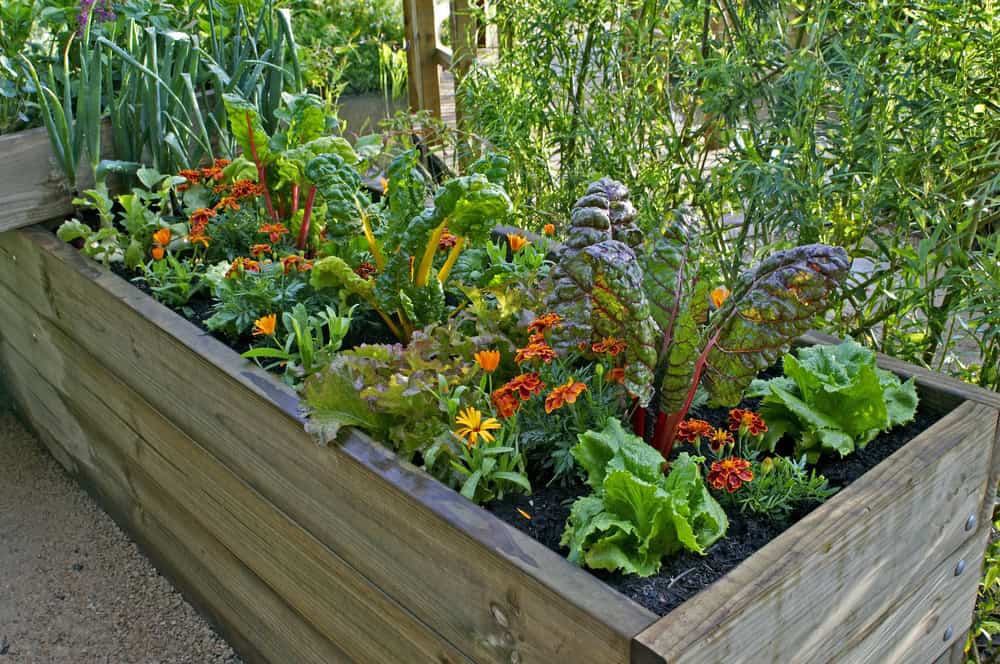
Who says a vegetable garden has to be filled with nothing but vegetables?
There’s something lovely about seeing colourful flowers growing alongside your tomatoes, beans and leafy greens. A few cheerful marigolds around a raised bed, nasturtiums spilling over the edges and bees visiting the borage can make even the most practical vegetable patch feel like a beautiful garden.
And those flowers aren’t just there to look pretty.
Some provide valuable nectar and pollen for pollinators, while others attract beneficial insects that help keep garden pests under control. Certain flowering plants can also provide ground cover, offer an additional harvest or give you useful material for making homemade fertiliser.
The important thing is choosing the right flowers for your garden.
You’ll often hear that particular flowers repel every pest or guarantee bigger vegetable harvests. Unfortunately, many of these traditional claims lack reliable evidence. But there are still plenty of good reasons to grow flowers among your vegetables.
Whether you’re growing food in raised beds, containers or a traditional vegetable patch, here are 14 beautiful flowers worth making room for, along with practical advice for growing them successfully in the UK.
Why Grow Flowers in Your Vegetable Garden?
It’s easy to imagine vegetables and flowers belonging in completely separate parts of the garden. But there’s no reason they can’t grow together. In fact, adding flowers to a vegetable garden can offer several useful benefits.
Attract Pollinators
Many vegetables and fruits depend on insects for successful pollination. Courgettes, pumpkins, squash, cucumbers, runner beans and strawberries can all benefit from visits by pollinating insects.
Growing a variety of flowers nearby helps provide food for bees, hoverflies and other pollinators throughout the growing season.
However, not every vegetable needs insects to produce a harvest.
Tomatoes are largely self-pollinating, although bumblebee visits can improve pollen release, while sweetcorn relies on wind pollination.
Flowers are useful for supporting garden wildlife, but they don’t automatically increase the yield of every crop.
Encourage Beneficial Insects
Some insects are particularly helpful in a vegetable garden. Hoverfly larvae, ladybirds and lacewing larvae feed on aphids and certain other small pests.
By growing flowers that provide nectar and pollen, you can help support the adult insects and encourage them to spend time in your garden. This doesn’t mean every pest will disappear.
A healthy garden will usually contain some insects feeding on plants, along with the creatures that help keep their populations in balance.
Add Colour and Interest
Vegetable gardens are productive places, but they can be beautiful too. Flowers add colour, different shapes and seasonal interest to an area otherwise dominated by edible crops.
Some also make lovely cut flowers, allowing you to enjoy a few blooms indoors without sacrificing growing space elsewhere.
Cover Bare Soil
Low-growing flowers can help cover exposed soil, reducing some moisture loss and making it harder for weeds to establish.
However, living plants also need water and nutrients.
A flower that spreads vigorously around vegetables may create more competition than benefit, so choose your planting positions carefully.
Support a More Diverse Garden
Growing a mixture of crops and flowers provides a wider range of resources for garden wildlife. The aim isn’t to eliminate every insect or create a perfectly pest-free garden.
It’s to grow healthy vegetables while making the surrounding space more welcoming to beneficial creatures.
14 Best Flowers to Plant in Your Vegetable Garden
Some of these flowers are especially useful for attracting pollinators, while others offer practical benefits such as edible flowers, additional ground cover or material for homemade plant feeds.
Not every one belongs directly between your vegetables. In some cases, a nearby border or container is the better option.
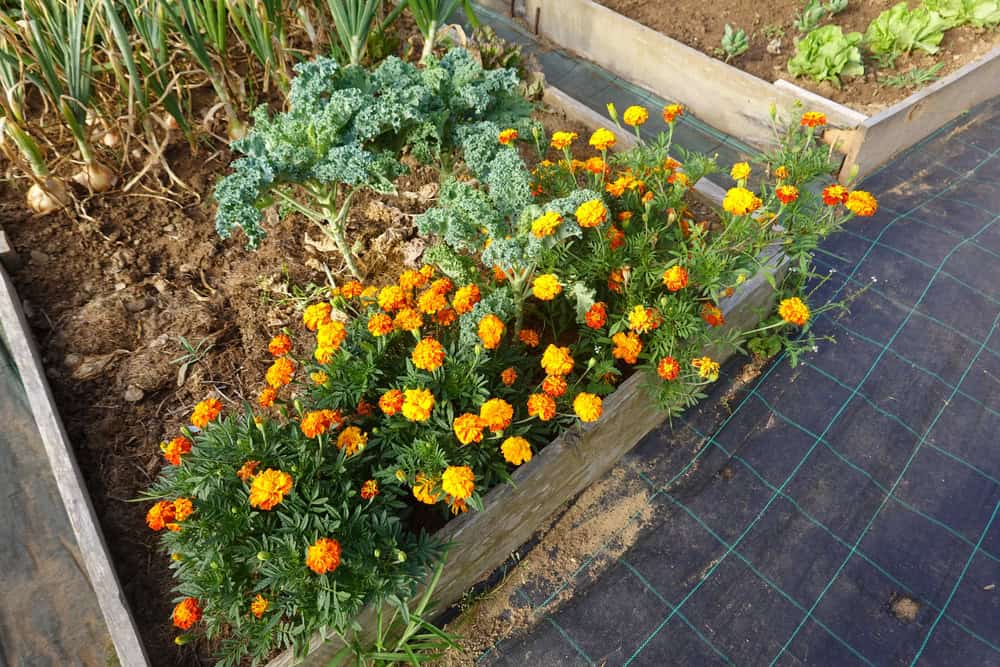
1. French Marigolds (Tagetes patula)
French marigolds are among the most popular flowers for vegetable gardens, and it’s easy to see why. Their cheerful orange, yellow and red blooms look lovely around raised beds, and compact varieties fit neatly into smaller growing spaces.
But they’re particularly interesting because certain pest-control benefits are supported by research.
A UK study found that growing French marigolds alongside greenhouse tomatoes helped reduce the development of glasshouse whitefly populations. The researchers linked the effect to limonene, a naturally occurring compound released by the marigolds.
However, this doesn’t mean marigolds repel every insect or protect vegetables from rabbits, slugs and caterpillars.
Why grow them: Colourful flowers, visiting insects and evidence-supported whitefly management around tomatoes.
Where to plant: Around vegetable bed edges, in containers or alongside greenhouse tomatoes.
UK growing tip: Start seeds under cover in spring and plant outside after the risk of frost has passed. French marigolds enjoy sunshine and well-drained soil.
One important distinction: French marigolds belong to the genus Tagetes, while pot marigolds belong to Calendula. They aren’t interchangeable when discussing specific research findings.
2. Calendula (Calendula officinalis)
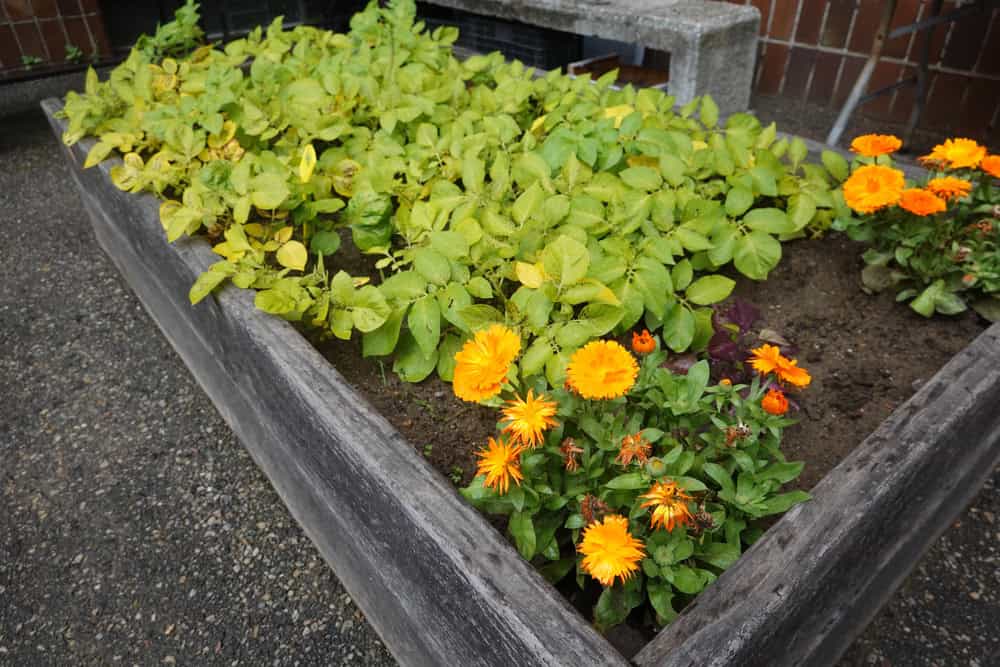
Calendula, also known as pot marigold, is one of my favourite flowers for a relaxed, cottage-style vegetable garden. Its sunny orange and yellow flowers are easy to grow and provide accessible nectar and pollen for visiting insects.
Calendula is particularly useful for supporting hoverflies, whose larvae may feed on aphids. It’s also a flower that can fit comfortably into informal growing spaces without needing complicated care.
Why grow it: Beneficial insects, long-lasting colour and attractive flowers.
Where to plant: Raised bed edges, mixed borders or sunny gaps between vegetables where there is adequate space.
UK growing tip: Calendula can be sown directly outside during spring, with autumn sowing possible in suitable conditions. Deadhead some flowers to encourage continued blooming, but allow others to set seed.
Calendula petals from correctly identified, untreated plants are also traditionally used as edible decorations. Only use flowers for food when you’re certain of their identity and suitability for consumption.
3. Borage (Borago officinalis)
Borage is one of those plants that makes a vegetable garden feel a little more alive. Its bright blue, star-shaped flowers attract bees, particularly bumblebees, and provide a useful nectar source.
The plants can become quite large and a little untidy, but that’s part of their charm in a relaxed garden.
Borage is often recommended for growing near tomatoes, strawberries and squash. Its most dependable benefit is attracting pollinating insects, rather than repelling tomato hornworms or other specific pests.
Why grow it: Excellent flowers for visiting bees and a useful addition to a pollinator-friendly garden.
Where to plant: Along the outer edges of vegetable beds, where the plants have room to grow.
UK growing tip: Sow borage outdoors in spring once conditions are suitable. It often self-seeds, so you may find new plants appearing the following year.
Borage flowers are traditionally used to decorate salads and summer drinks, and the RHS lists them among edible flowers. However, borage contains naturally occurring pyrrolizidine alkaloids, so regular consumption isn’t advisable. Avoid using borage leaves for herbal infusions, and seek appropriate advice before consuming it during pregnancy or giving it to children.
4. Cosmos (Cosmos bipinnatus)
Cosmos is a wonderful choice if you want flowers that look delicate but produce plenty of colour. Its daisy-like blooms appear in shades of pink, white and purple, often continuing well into autumn. Single-flowered varieties provide accessible nectar and pollen for bees, hoverflies and other insects.
Cosmos is sometimes described as a plant that directly protects vegetables from aphids. Its real benefit is providing floral resources that support insect diversity, rather than guaranteeing pest control.
Why grow it: Long-lasting summer colour and flowers for pollinators and beneficial insects.
Where to plant: Along the back or sides of vegetable beds, or in a nearby cutting garden.
UK growing tip: Sow under cover in spring or directly outside once conditions are warm enough. Some varieties grow tall, so avoid planting them where they’ll shade smaller vegetables.
Regularly cutting or deadheading flowers can help encourage further blooms.
5. Lavender (Lavandula angustifolia)
Lavender brings something different to a vegetable garden. Its fragrant purple flowers attract bees and butterflies, while its evergreen foliage provides structure throughout the year.
It’s especially useful around the edges of a growing area, where it can form an attractive low hedge. However, lavender has different growing requirements from many vegetables.
It prefers full sun and very well-drained soil, while crops such as celery, courgettes and leafy greens often need more consistent moisture.
Why grow it: Pollinator-friendly flowers, fragrance and evergreen structure.
Where to plant: Sunny borders, gravel areas, raised edges or separate containers near the vegetable patch.
UK growing tip: English lavender is generally a good choice for British gardens. Avoid wet, heavy soil, and choose a spot where the roots won’t stay waterlogged over winter.
Lavender’s fragrance isn’t reliable protection against mice, deer or other animals feeding on vegetables. Grow it for the insects it supports and the beauty it brings to the garden.
6. Nasturtiums (Tropaeolum majus)
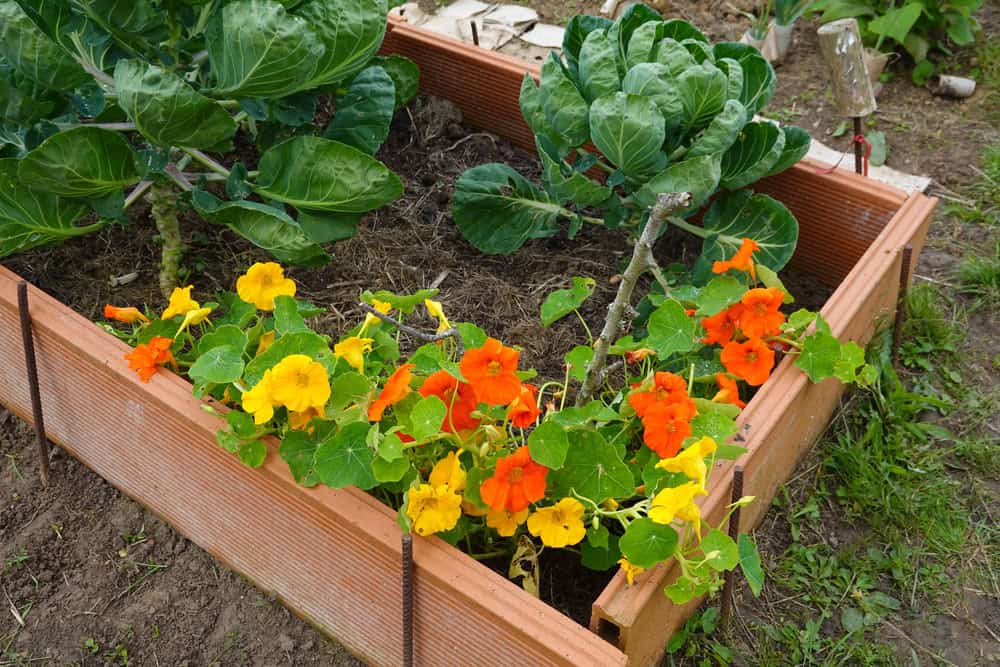
Nasturtiums are wonderfully cheerful plants, especially when their bright orange, red and yellow flowers spill over the edges of a raised bed. They’re easy to grow from seed and provide flowers for pollinators. Their leaves can also cover some exposed soil.
Nasturtiums sometimes attract aphids, particularly blackfly, which is why they’re occasionally grown as trap crops. However, they don’t reliably repel aphids, slugs or other pests. A heavily infested nasturtium may also need monitoring to prevent pest populations from building up.
Why grow them: Colourful flowers, pollinator support and potential use as a trap plant for certain aphids.
Where to plant: Along vegetable bed edges, in large containers or in hanging baskets.
UK growing tip: Sow outdoors after the risk of hard frost has passed. Compact varieties are useful for small gardens, while trailing types need more space.
The flowers and leaves of correctly identified, untreated nasturtiums are edible and have a distinctive peppery flavour.
7. Sunflowers (Helianthus annuus)
Sunflowers can bring real personality to a vegetable garden. Their impressive height, bright flowers and developing seedheads make them particularly enjoyable to grow.
Many single-flowered varieties provide pollen and nectar for visiting insects, while the mature seeds can provide food for birds.
Sunflowers are sometimes recommended as living supports for climbing beans. However, tall sunflower stems aren’t always strong enough to support heavy climbing plants, particularly in exposed or windy gardens.
Why grow them: Pollinators, wildlife interest, edible seeds from suitable varieties and dramatic summer colour.
Where to plant: Along a sunny boundary or at the edge of your vegetable garden.
UK growing tip: Start seeds in spring and plant out once conditions are suitable. Tall varieties may need staking. If you’re growing sunflowers specifically for wildlife, choose pollen-producing varieties rather than pollen-free types bred for cut flowers.
In the UK, position tall sunflowers carefully so they don’t cast unnecessary shade across your vegetable beds.
8. Zinnias (Zinnia elegans)
If you love bright summer colour, zinnias are a lovely addition to a vegetable garden. Their flowers come in shades of pink, red, orange, yellow, purple and white.
Single-flowered varieties are particularly useful for pollinators because their pollen and nectar are more accessible than those of some heavily doubled varieties.
Zinnias are popular with hummingbirds in parts of the Americas, but real hummingbirds aren’t found in the UK. British gardeners may occasionally see a hummingbird hawk-moth feeding on suitable flowers instead.
Why grow them: Summer colour, cut flowers and visiting pollinators.
Where to plant: Sunny bed edges, containers or a nearby cutting garden.
UK growing tip: Zinnias need warmth and dislike frost. Start seeds under cover in spring and plant out once temperatures are reliably mild.
Give plants enough room for airflow and avoid constantly wet foliage, as zinnias can be susceptible to powdery mildew.
9. Sweet Peas (Lathyrus odoratus)
Few flowers are as lovely in a summer garden as sweet peas. Their colourful, fragrant blooms make wonderful cut flowers, and they’re attractive to visiting insects.
As climbers, they can add height without taking up much ground space. However, I’d avoid encouraging gardeners to grow ornamental sweet peas directly among edible peas or beans on the same supports.
The plants can become tangled, making harvesting difficult. There’s also an important safety distinction.
Sweet peas are ornamental plants, and their pods and seeds must not be eaten. They’re not the same as edible garden peas.
Why grow them: Fragrant summer flowers, cut flowers and additional resources for pollinators.
Where to plant: On a separate trellis or arch near the vegetable garden.
UK growing tip: Sweet peas can be sown in autumn or spring, depending on growing conditions. Provide support and pick flowers regularly to encourage more blooms.
Keep their pods clearly separate from edible peas, particularly in gardens used by children.
10. Sweet Alyssum (Lobularia maritima)
Sweet alyssum may be small, but it’s one of the most useful flowers to consider for a vegetable garden. Its clusters of tiny white, pink or purple flowers provide accessible nectar for hoverflies and other beneficial insects.
Research has shown that sweet alyssum grown alongside lettuce can help support natural enemies of aphids. This makes it a particularly interesting option for gardeners who want evidence-based companion planting benefits.
Why grow it: Supports hoverflies and other beneficial insects, with research-backed applications for aphid management in some crops.
Where to plant: Along raised-bed edges, around lettuce beds, or in nearby containers.
UK growing tip: Sow in spring and provide a sunny position. Keep plants watered during dry spells, especially in containers.
Although alyssum is relatively low-growing, avoid allowing it to crowd young vegetable seedlings.
11. Lupins (Lupinus species)
Lupins produce spectacular spikes of flowers that can make a vegetable garden feel wonderfully cottage-like. Their flowers attract visiting insects, including bees.
Lupins also belong to the legume family and can form relationships with nitrogen-fixing bacteria. However, this doesn’t mean planting an ornamental lupin beside a vegetable automatically feeds the neighbouring crop.
The plant uses most of the nitrogen itself, with more potentially becoming available as plant material breaks down.
Why grow them: Colourful flower spikes and pollinator support.
Where to plant: In a nearby ornamental border rather than crowded among small vegetables.
UK growing tip: Lupins generally enjoy sunshine and well-drained soil. Give them space to grow and protect young shoots from slugs and snails.
Ornamental lupins contain harmful compounds, particularly in their seeds, and should not be eaten. They’re best kept clearly separate from edible beans and peas.
12. Comfrey (Symphytum species)
Comfrey isn’t the neatest or smallest plant, but it can be extremely useful in an organic garden. Its bell-shaped flowers attract bees, and its large leaves can be harvested for making homemade plant feed or used as mulch.
Comfrey is often described as a plant that brings nutrients up from deep within the soil. While its leaves do contain nutrients, growing comfrey beside vegetables doesn’t automatically transfer those nutrients to neighbouring plants.
The most practical benefits come when you harvest the leaves and use them as fertiliser or mulch.
Why grow it: Bee-friendly flowers and useful plant material for homemade feeding and mulching.
Where to plant: A dedicated area near the vegetable garden, with enough space for the plant to mature.
UK growing tip: Choose a suitable variety, such as a sterile Bocking 14 comfrey, if you want to minimise unwanted self-seeding.
Comfrey can develop a substantial root system and may be difficult to remove once established. Wear gloves when cutting the leaves. Comfrey contains pyrrolizidine alkaloids and shouldn’t be used as a food or taken internally.
13. Chamomile (Matricaria chamomilla)
Chamomile brings a gentle, informal feel to a vegetable garden. Its small, daisy-like flowers are attractive to visiting insects, and the plant can be grown among other annuals or along the edges of vegetable beds.
Chamomile is sometimes recommended because it’s believed to protect neighbouring plants against fungal diseases. However, there’s insufficient evidence that simply growing chamomile beside vegetables prevents powdery mildew or other fungal problems.
Why grow it: Flowers for visiting insects, cottage-garden charm and a useful addition to a mixed growing area.
Where to plant: Sunny bed edges, herb gardens or containers.
UK growing tip: German chamomile is an annual that can be grown from seed in spring. It may self-seed in suitable conditions.
If you want to use chamomile flowers for tea, make sure you’ve identified the correct species and check suitability, particularly if you have allergies to plants in the daisy family.
14. Clover (Trifolium species)
Clover might not be the first flower you think of adding to a vegetable garden, but it has several useful qualities. Its flowers provide nectar for visiting insects, particularly bees.
Clover also belongs to the legume family and can fix atmospheric nitrogen through bacteria associated with its roots.
Certain clovers are used as green manures or cover crops to protect bare soil and add organic matter. However, growing clover beside vegetables doesn’t automatically supply them with extra nitrogen. And a dense clover ground cover can compete with crops for moisture and nutrients.
Why grow it: Pollinator support, soil cover and possible use as a managed green manure.
Where to plant: In unused vegetable beds, managed pathways or dedicated green manure areas.
UK growing tip: Choose a clover species suitable for your purpose and growing conditions.
If using clover as a green manure, follow appropriate advice on when to cut or incorporate it before planting the next crop. Avoid allowing vigorous clover to establish directly around small seedlings.
Quick Guide: Which Flowers Should You Choose?
If you’re not sure where to begin, this chart can help.
|
Flower |
Main benefit |
Best position |
|---|---|---|
|
French marigolds |
Whitefly management with tomatoes; flowers |
Greenhouse or bed edges |
|
Calendula |
Beneficial insects and colour |
Vegetable bed edges |
|
Borage |
Bees and nectar |
Spacious borders |
|
Cosmos |
Pollinators and cut flowers |
Sunny borders |
|
Lavender |
Pollinators and fragrance |
Separate dry, sunny border |
|
Nasturtiums |
Pollinators and possible aphid trap crop |
Bed edges and containers |
|
Sunflowers |
Pollinators, seeds and height |
Garden boundaries |
|
Zinnias |
Pollinators and summer colour |
Sunny borders or pots |
|
Sweet peas |
Fragrant flowers and cut flowers |
Separate trellis |
|
Sweet alyssum |
Hoverflies and other beneficial insects |
Raised bed edges |
|
Lupins |
Pollinators and ornamental colour |
Nearby flower border |
|
Comfrey |
Bees and material for homemade feed |
Dedicated growing space |
|
Chamomile |
Visiting insects and informal flowers |
Herb or vegetable bed edge |
|
Clover |
Pollinators and green manure |
Managed cover-crop areas |
The best choice depends on the size of your garden, the vegetables you’re growing and whether you want flowers mainly for wildlife, colour or a practical gardening purpose.
Where Should You Plant Flowers in a Vegetable Garden?
You don’t have to squeeze flowers into every available gap. Sometimes the simplest arrangement is also the most effective.
Around Raised Bed Edges
Compact flowers such as French marigolds, calendula and sweet alyssum are particularly useful around raised beds. They provide colour without taking up too much space.
Remember to leave enough room for the flowers to mature without crowding nearby vegetables.
In Nearby Containers
Pots are a great option when vegetable beds are already full. You can grow flowers alongside a greenhouse, on a patio or near your vegetable patch. Containers also make it easier to give plants different watering conditions.
For example, lavender can grow in its own well-drained container rather than sharing consistently moist soil with thirsty vegetables.
Along Garden Boundaries
Taller flowers such as sunflowers, cosmos and sweet peas can work well around the edges of a vegetable-growing area. Consider the direction of the sun when choosing their positions.
In UK gardens, tall plants positioned to the south of vegetable beds may cast considerable shade.
In a Dedicated Wildlife-Friendly Border
If you have space, consider creating a small flower border close to the vegetable garden. A mixture of annuals and perennials can provide nectar and pollen over a longer period.
This is also a good location for larger plants such as comfrey and lupins.
When to Sow Flowers for Your Vegetable Garden in the UK
Different flowers need different starting conditions. Here’s a general guide to planning your sowing.
|
Flower |
General UK sowing or planting time |
|---|---|
|
French marigolds |
Sow under cover March–April; plant out after frost |
|
Calendula |
Sow spring or autumn where conditions suit |
|
Borage |
Sow outdoors in spring |
|
Cosmos |
Sow under cover in spring; plant out after frost |
|
Lavender |
Plant nursery-grown plants in spring |
|
Nasturtiums |
Sow spring to early summer, once frost risk has passed |
|
Sunflowers |
Sow under cover in spring or outdoors once soil has warmed |
|
Zinnias |
Sow under cover in spring; plant out after frost |
|
Sweet peas |
Sow autumn or spring |
|
Sweet alyssum |
Sow spring |
|
Lupins |
Sow or plant in spring, depending on variety |
|
Comfrey |
Plant established plants or root cuttings in suitable conditions |
|
Chamomile |
Sow in spring |
|
Clover |
Sow in spring or late summer, depending on species and use |
These are general guidelines rather than fixed dates. Gardeners in colder or more exposed parts of the UK may need to delay outdoor planting, particularly for tender annuals such as zinnias and marigolds.
Always check the seed packet and local growing conditions.
How to Attract More Beneficial Insects with Flowers
Growing a few attractive flowers is a lovely start, but you can do more to make your vegetable garden more welcoming to helpful wildlife.
Choose Different Flower Shapes
Not every insect can feed from the same type of flower. Small, open blooms are particularly useful for hoverflies and certain other beneficial insects.
Larger flowers may be better suited to bumblebees and other pollinators. A mixture of different flower shapes can support a wider range of visitors.
Provide Flowers Throughout the Season
Try to avoid having all your flowers bloom during the same few weeks. Early flowers can support insects emerging in spring, while late-flowering plants provide resources as autumn approaches.
Calendula, cosmos, lavender and other suitable flowers can help extend the flowering season.
Don’t Remove Every Aphid Immediately
This might sound strange when you’re trying to protect your vegetables. But small aphid colonies provide food for hoverfly larvae, ladybirds and other natural predators.
If an otherwise healthy plant has only a few aphids, you may be able to leave them while beneficial insects establish. For serious infestations or vulnerable seedlings, more direct action may still be necessary.
Avoid Unnecessary Pesticide Use
Broad-spectrum insecticides can harm beneficial insects as well as pests. Start with observation, physical protection and other targeted methods whenever possible.
Leave Some Habitat for Wildlife
Flowers provide food, but insects and other garden wildlife also need places to shelter and overwinter. A small area of undisturbed vegetation, suitable hollow stems or a log pile can help provide habitat without making the vegetable beds difficult to manage.
Common Mistakes When Growing Flowers with Vegetables
Flowers can be genuinely useful, but a few things are worth watching for.
Expecting Flowers to Repel Every Pest
Marigolds, lavender and other scented plants aren’t guaranteed pest barriers. Some specific effects are supported by research, but general claims that they repel every insect or animal are misleading.
Overcrowding Your Vegetable Beds
Flowers need water, nutrients and growing space just like vegetables. Avoid planting so densely that vegetables struggle to develop or become difficult to harvest.
Choosing Plants with Different Soil Requirements
Lavender prefers dry, well-drained soil, while vegetables such as celery need more consistent moisture. These plants are often easier to grow near one another rather than in exactly the same soil.
Letting Vigorous Plants Take Over
Nasturtiums, comfrey and some clovers can spread considerably. Choose suitable positions and manage their growth when necessary.
Assuming Every Flower Is Edible
Not all flowers are safe to eat. Sweet peas and ornamental lupins are particularly important examples of plants that should not be confused with edible crops.
Only eat flowers when you’ve positively identified the species, confirmed they’re safe to eat, and know they haven’t been treated with unsuitable pesticides.
Frequently Asked Questions
What are the best flowers to grow in a vegetable garden?
French marigolds, calendula, nasturtiums, sweet alyssum, cosmos and borage are all useful choices. The best option depends on whether you’re looking for pollinators, beneficial insects, extra colour or a particular pest-management benefit.
Which flowers attract beneficial insects?
Sweet alyssum, calendula, chamomile and other accessible flowers can attract hoverflies and other beneficial insects. Growing a variety of flowering species is usually more helpful than relying on one plant.
Do marigolds really protect vegetables?
French marigolds have evidence supporting their use in reducing whitefly populations around greenhouse tomatoes. However, they don’t reliably repel every garden pest.
Can I grow flowers and vegetables in the same raised bed?
Yes. Compact flowers can work particularly well around raised bed edges. Just leave enough room for both the flowers and vegetables to develop properly.
Do flowers help vegetables produce more fruit?
Flowers can support pollinators important for crops such as courgettes, pumpkins, squash, and runner beans. However, adding flowers doesn’t guarantee larger harvests, especially for crops that don’t depend on insect pollination.
Which flowers are easiest to grow from seed in the UK?
Calendula, nasturtiums, borage, cosmos and sunflowers are good options for beginners. French marigolds are also straightforward when started in suitable warmth.
Are all marigolds edible?
No. Different plants are sold under the name marigold, and they aren’t interchangeable. Pot marigold (Calendula officinalis) petals have recognised culinary uses, but you should identify the plant correctly before considering it for food.
Can I use flowers instead of insect-proof netting?
Not reliably. Flowers can support beneficial insects, but fine insect-proof mesh is still a more dependable option for protecting vulnerable crops from pests such as cabbage white caterpillars and carrot fly.
A Vegetable Garden Can Be Beautiful and Productive
One of the nicest things about growing flowers among your vegetables is how much character they bring to the garden.
A row of marigolds beside the tomatoes, a few nasturtiums trailing over a raised bed or cosmos flowering near the runner beans can turn a practical growing space into somewhere you genuinely enjoy spending time.
And while not every traditional companion planting claim stands up to scrutiny, flowers still have plenty to offer. They provide food for pollinators, help support beneficial insects, bring colour throughout the growing season and make the whole garden feel more alive.
You don’t need to plant all 14 flowers at once. Start with two or three that suit your garden, give them room to grow, and enjoy seeing which insects visit.
A productive vegetable garden doesn’t have to be all vegetables. Sometimes a few flowers are exactly what it needs.
Save This Gardening Guide for Later
Planning your garden? Save one of these pins to your favourite gardening board so you can find this guide again.

If you loved this article, be sure to check out these next:
