
How to Grow Radishes: A Simple Guide to Sowing, Growing and Harvesting

These small yet nutrition-packed root vegetables are one of the earliest vegetables you can eat from the garden.
This post may contain affiliate links. Please see the affiliate disclosure for details.
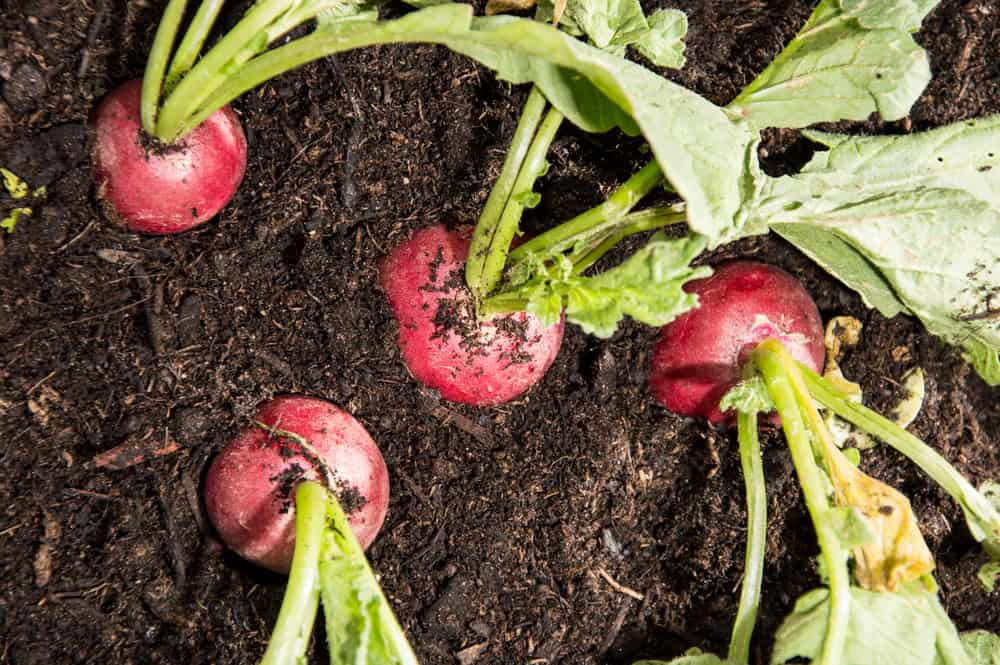
Radishes are one of the quickest and easiest vegetables to grow, making them a brilliant choice if you’re new to growing your own food or simply want to make the most of a small vegetable garden.
These crisp, peppery root vegetables can be ready to harvest in as little as four weeks, and you don’t need a large allotment to grow them. A spare corner of a raised bed, a container on the patio, or a gap between slower-growing vegetables can all provide enough space for a satisfying crop.
One of the nicest things about growing radishes is how quickly you see results. Sow a few seeds, keep the soil moist, and before long, you’ll be pulling fresh radishes from the ground.
They’re also ideal for growing throughout much of the UK gardening season, particularly during the cooler months of spring and autumn.
Whether you’re growing radishes for the first time or have struggled to get them to develop properly, here’s everything you need to know.
When to Sow Radishes in the UK
Radishes are cool-season vegetables, so they generally grow best in mild temperatures.
For most gardeners in the UK, spring and late summer are particularly good times to sow salad radishes.
Although you can grow them in summer, very hot, dry conditions can cause problems. Plants may bolt, which means they start producing flowers and seeds instead of developing the crisp roots you’re hoping to harvest. A general UK sowing guide is:
- February: Early sowings are possible under cloches or in a protected greenhouse once conditions are suitable.
- March to May: An excellent time to sow salad radishes outdoors as the soil warms.
- June to July: Continue sowing in suitable conditions, but provide light shade and extra water during hot spells.
- August to September: A useful period for late salad radish crops, depending on local weather.
- July to August: Sow many winter radish varieties for harvesting later in the year.
These timings are a guide, not a strict calendar. Gardeners in colder parts of the UK may need to sow later in spring or use protection, while those in milder areas may have a longer growing season.
Try Successional Sowing for a Longer Harvest
Instead of planting an entire packet of radish seeds at once, try sowing a small row every couple of weeks. This is called successional sowing, and it’s particularly useful for fast-growing vegetables.
Radishes are usually at their best when harvested young, so smaller, regular sowings can provide a steady supply without leaving you with more radishes than you can eat.
The Best Radish Varieties to Grow
Not all radishes are the small, round red vegetables you see in supermarket salad bags. They come in different shapes, sizes, and colours, and some suit autumn and winter growing better than others.
Salad Radishes
These are the familiar, quick-growing varieties that work especially well in spring and during cooler summer weather.
- Cherry Belle: A popular variety with round, bright red roots and crisp white flesh.
- French Breakfast: Produces attractive elongated red roots with white tips.
- Scarlet Globe: A traditional round red radish, suitable for growing in beds and containers.
- White Icicle: A slender white variety with a longer root than a typical round salad radish.
- Amethyst: An eye-catching variety with purple skin and white flesh.
If you’re growing radishes for the first time, Cherry Belle or French Breakfast would be good varieties to consider.
Winter and Oriental Radishes
These take longer to grow and generally produce much larger roots.
- Black Spanish Round: A winter radish with dark skin and white flesh, known for its strong, peppery flavour.
- China Rose: An elongated winter radish with rosy-pink skin.
- Daikon (Mooli): A type of oriental radish that produces large, usually white roots with a generally milder flavour.
Larger radishes are useful for autumn and winter harvesting, and many can be cooked or eaten raw. Always check the seed packet before sowing, as different varieties have different spacing, growing-season and harvesting requirements.
How to Plant Radishes
The easiest way to grow radishes is to sow the seeds directly into the soil where you want them to mature.
Because radishes develop an edible, swollen root, direct sowing is usually better than starting them in trays and transplanting them later.
Step 1: Choose a Suitable Growing Position
Choose a sunny part of the garden with loose, well-drained soil. Radishes will also tolerate some light shade, which can be helpful during warmer weather.
Remove weeds and large stones from the growing area. If the soil is compacted, gently loosen it before sowing. Adding some well-rotted garden compost can improve poor soil, but radishes don’t need particularly rich growing conditions.
Avoid adding fresh manure immediately before planting.
Step 2: Sow the Seeds
For ordinary salad radishes:
- Make a shallow drill approximately 1cm deep.
- Sow seeds thinly, around 2.5–5cm apart.
- Space rows approximately 15cm apart.
- Cover the seeds lightly with soil.
- Water gently, using a watering can with a fine rose.
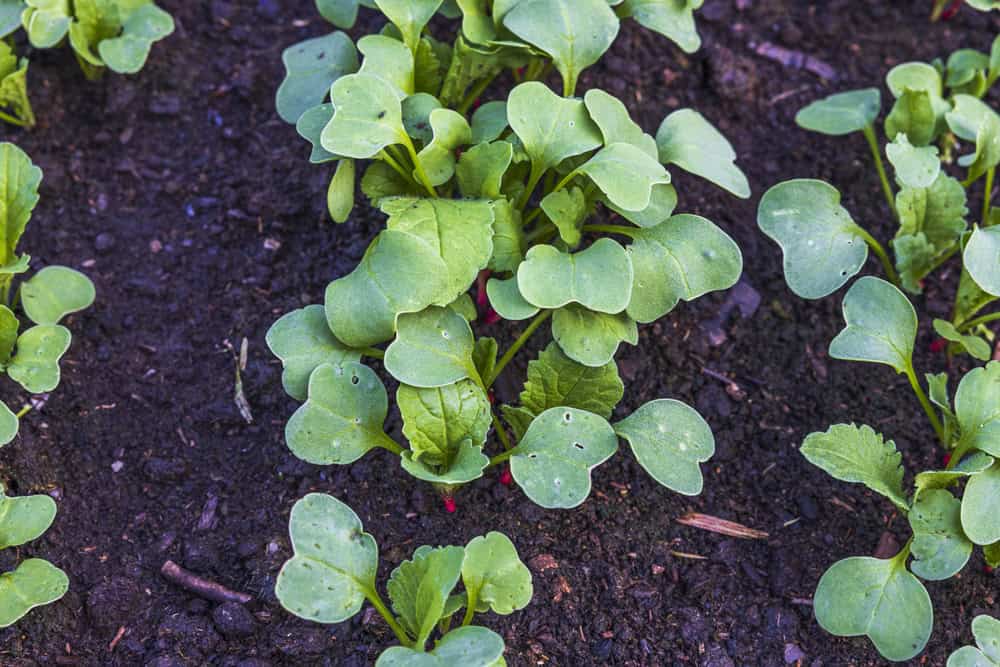
In suitable conditions, radish seedlings usually appear within 7–10 days.
Growing tip: If you sow the seeds carefully at the recommended spacing, you may not need to thin the seedlings later. This saves time and avoids disturbing nearby plants.
Step 3: Thin the Seedlings if Needed
If your radishes germinate too close together, remove some of the smaller seedlings to give the remaining plants enough room. For most small salad radishes, aim for approximately 2.5–5cm between plants.
Larger winter and daikon radishes generally need around 15–20cm, depending on the variety. Crowded radishes may produce plenty of leaves without developing good-sized roots, so don’t be tempted to leave too many seedlings growing together.
How to Care for Growing Radishes
Once your radishes have germinated, they need relatively little attention. The most important things are consistent moisture, enough growing space and harvesting at the right time.
Watering Radishes
Radishes grow quickly, and they need reasonably consistent moisture to develop crisp, tender roots.
When the soil becomes too dry, growth can slow down. This may result in roots that are small, woody or unpleasantly peppery.
Irregular watering can also cause the developing roots to split.
Check the soil regularly, especially during dry weather, and water as needed to prevent it from drying out.
Container-grown radishes often need more frequent watering because compost dries out faster than garden soil. Avoid keeping the soil permanently waterlogged, though, as good drainage is still important.
Do Radishes Need Fertiliser?
In most reasonably fertile garden soils, radishes don’t need additional feeding during their short growing season. If you’ve already improved your vegetable beds with well-rotted garden compost, that is usually sufficient.
Too much nitrogen can encourage leafy growth without improving the roots.
If your soil is particularly poor, improve it before sowing rather than automatically applying fertiliser while the radishes are growing.
Keeping Weeds Under Control
Radishes don’t like competing with weeds for light, water and growing space. Remove weeds while they’re small, taking care not to disturb the developing roots.
You can gently hoe between rows, but hand weeding is often safer close to young radish plants. Because salad radishes mature so quickly, extensive mulching usually isn’t necessary.
However, larger winter radishes may benefit from a suitable organic mulch to help conserve moisture and suppress weeds.
Growing Radishes in Containers
You don’t need a vegetable patch to grow radishes successfully. Their compact size makes salad radishes particularly suitable for pots, troughs and raised planters. This is a lovely option for anyone gardening on a patio, balcony or in a small outdoor space.
How to Grow Radishes in Pots
- Choose a wide container with drainage holes. A pot around 30cm wide and deep is a suitable starting point.
- Fill it with good-quality peat-free multipurpose compost.
- Sow the seeds approximately 1cm deep and 2.5–5cm apart.
- Water gently and position the container somewhere bright.
- Keep the compost consistently moist.
- Harvest the radishes as soon as they reach a suitable size.
Shallow-rooted salad varieties are generally easier to manage in containers than large daikon radishes, which need much deeper growing space.
Container-growing tip: During hot weather, move pots somewhere they receive morning sun and some protection from the strongest afternoon heat. This can help reduce the risk of the compost drying out too quickly.
Common Problems When Growing Radishes
Although radishes are usually easy to grow, there are a few problems you might encounter. The good news is that most can be avoided by choosing the right growing conditions.
Radishes Growing Leaves but No Roots
If your plants are producing lots of leafy growth but very little swelling beneath the soil, several things could be responsible. Common causes include:
- Overcrowded seedlings
- Excessive nitrogen
- Hot weather
- Inconsistent watering
- Unsuitable growing conditions
Check that the plants have enough space, avoid unnecessary fertiliser and keep the soil consistently moist. For summer crops, try sowing in a slightly cooler position.
Radishes Are Too Spicy or Woody
Radishes naturally have a peppery flavour, but those left growing for too long can become excessively hot and develop a woody or pithy texture.
Slow growth caused by drought or other stressful conditions can make the problem worse. Harvest salad radishes promptly rather than allowing them to become oversized.
Radishes Are Splitting
Split radishes are often associated with inconsistent moisture. If the soil becomes very dry and then receives a large amount of water, the roots may expand unevenly and crack.
Try to maintain more even soil moisture throughout the growing period.
Radishes Are Flowering Instead of Producing Roots
This is known as bolting. It often happens when plants experience hot weather, long days or other stressful growing conditions.
Once a radish bolts, the root is unlikely to develop into the tender, crisp vegetable you wanted.
For the best results, grow ordinary salad radishes during cooler parts of the year and choose suitable varieties for summer or autumn sowings.
Common Radish Pests
Like other members of the cabbage family, radishes can attract several pests. Check your plants regularly, especially when they’re young.
Flea Beetles
Flea beetles are small insects that chew tiny holes in radish leaves. Established plants can often tolerate minor damage, but young seedlings may suffer more seriously. Fine insect-proof mesh or horticultural fleece can help protect young crops when fitted securely.
Slugs and Snails
Slugs and snails can damage emerging seedlings and tender leaves. Check around young plants regularly, particularly in damp weather.
Keeping the growing area free from excessive debris immediately around seedlings and using suitable physical protection can help.
Cabbage Root Fly
Cabbage root fly larvae can feed on radish roots, causing tunnels and damage. Because radishes belong to the Brassica family, they can be vulnerable to some of the same pests that affect cabbages and related vegetables.
Using fine insect-proof mesh can help prevent adult flies from reaching susceptible crops.
What About Rabbits?
Rabbits may feed on radish foliage, especially where young vegetables are easily accessible. Rather than deliberately planting radishes to distract rabbits from other crops, protect vulnerable vegetables with suitable fencing or barriers.
Using one vegetable as an unprotected sacrificial crop isn’t a reliable way to prevent damage elsewhere.
Companion Planting with Radishes
Radishes are useful in a mixed vegetable garden, especially because many salad varieties grow and mature so quickly.
They can be sown between slower-growing crops while those plants are still small, making good use of space that would otherwise remain empty. For example, radishes can be grown alongside:
- Peas: Early radishes may be harvested before pea plants grow large enough to compete for space.
- Parsnips: Fast-germinating radishes can help mark rows of slow-germinating parsnip seeds.
- Onions: Radishes can also be useful for marking rows while onion seedlings become established.
- Potatoes: Early radishes can sometimes be grown in available gaps before potato plants develop their full canopy.
These combinations are particularly useful for spacing, timing and efficient use of growing space. However, it’s important not to assume that every plant described as a companion will repel pests or improve another crop’s growth.
There is limited scientific evidence for many traditional companion planting claims.
For radishes, one of the most reliable benefits comes from intercropping — growing crops together in a way that makes efficient use of space and different harvesting times. Remember to harvest the radishes before neighbouring plants become overcrowded.
You can also read our companion planting guide for more ideas about planning a productive vegetable garden.
When and How to Harvest Radishes
One of the biggest mistakes when growing radishes is leaving them in the ground for too long. Unlike some vegetables, ordinary salad radishes don’t necessarily become better as they get bigger.
They are usually sweetest, crispest and most tender when harvested young.
When Are Radishes Ready to Harvest?
Many salad radishes can be ready approximately four to six weeks after sowing in suitable conditions. However, early sowings in cooler weather may take six to eight weeks.
Check the expected maturity time on your seed packet, then gently move a little soil away from the top of a root to see how large it has become.
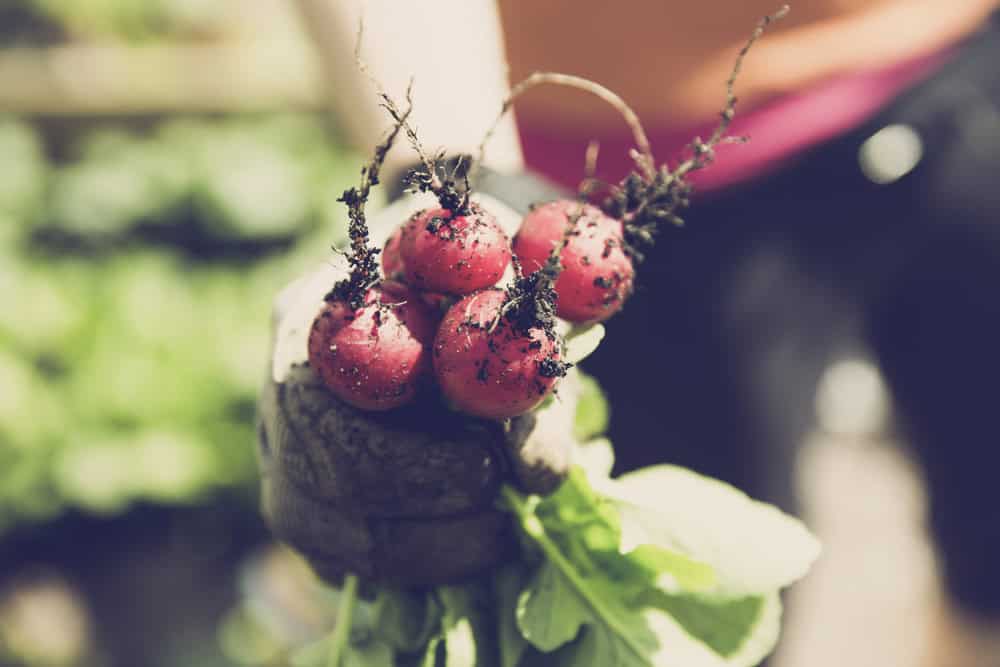
For many round salad varieties, around 2.5cm in diameter is a useful harvesting size. Different varieties develop to different sizes, so don’t use this measurement for every type of radish. Large winter radishes and daikon varieties need considerably longer to mature.
How to Harvest Radishes
Harvesting small salad radishes is straightforward.
- Check that the roots have reached a suitable size.
- Hold the leaves close to the top of the root.
- Gently pull the radish from the soil.
- If the soil is firm, loosen it carefully to avoid breaking the root.
- Remove excess soil and take your harvest inside.
For large daikon radishes, gently loosen the soil with a garden fork before lifting. Their long roots can break if pulled too forcefully. Try harvesting just a few radishes at a time so you can enjoy them fresh.
How to Store Fresh Radishes
Freshly harvested radishes are wonderfully crisp, but they can lose moisture and become soft if stored incorrectly. For ordinary salad radishes:
- Remove the leafy tops, leaving a small amount of stem if preferred.
- Brush or rinse away excess soil.
- Dry the roots if necessary.
- Place them in a suitable container or bag in the fridge to help prevent moisture loss.
It’s best to use fresh salad radishes fairly soon after harvesting, ideally within a week or two. The leaves don’t keep as well as the roots, so store them separately and use them within a few days.
Larger winter radishes may keep considerably longer under suitable cool storage conditions.
How to Use Homegrown Radishes
Radishes are much more versatile than you might think. The crisp roots are delicious raw, but you can also roast, pickle, or add them to cooked dishes. Try using your radish harvest in:
- Fresh green salads
- Sandwiches and wraps
- Homemade pickles
- Roasted vegetable dishes
- Stir-fries
- Crunchy vegetable platters
The leaves are edible too. Young, tender radish leaves can be added to salads, while older, slightly rougher leaves are often nicer when cooked. Try wilting them like spinach or blending them into a homemade pesto.
As with other homegrown vegetables, wash roots and leaves thoroughly before eating.
Frequently Asked Questions About Growing Radishes
How long do radishes take to grow?
Many salad radishes are ready approximately four to six weeks after sowing in favourable conditions, although some take longer. Winter radishes and daikon varieties generally require a longer growing period.
Can you grow radishes all year round in the UK?
Radishes can be grown across a long season, but ordinary salad varieties generally perform best during cooler conditions in spring and late summer. Winter varieties extend the harvesting season, while protected growing can allow some earlier or later sowings.
Do radishes grow better in sun or shade?
Radishes generally prefer a sunny position, but light shade can be useful during warm summer weather. Too much shade may encourage leafy growth at the expense of good root development.
Why are my radishes so small?
Overcrowding, dry soil, excessive heat and unsuitable growing conditions can all affect root development. Ensure your plants have adequate spacing and moisture, and harvest at the appropriate time for the variety.
Can you eat radish leaves?
Yes. Radish leaves are edible and have a peppery flavour. Young leaves can be used raw, while older leaves are often more enjoyable cooked.
Can I grow radishes in a raised bed?
Absolutely. Radishes grow well in raised beds with suitable soil and good drainage. They are particularly useful for filling small gaps between slower-growing vegetables.
Enjoy Growing Your Own Radishes
Radishes are one of those vegetables that prove growing your own food doesn’t have to be complicated.
They don’t demand lots of space, specialist equipment or months of patience. Give them suitable soil, enough moisture, and a little room to grow, and you could enjoy your first harvest in just a few weeks.
For the best results, sow small batches regularly during suitable weather, avoid overcrowding and harvest your radishes while they’re young and crisp.
Whether you’re growing vegetables in a raised bed, allotment or a few containers on the patio, radishes are a lovely crop to include in your growing plans.
A Note About Our Gardening Advice
Gardening Is Great is based in the UK, so our growing guides and seasonal advice are written with British gardens and growing conditions in mind. However, much of our advice is also useful to gardeners in other temperate climates, including parts of Europe, North America and beyond. Just remember that planting times, frost dates and growing seasons vary depending on where you live. Always adjust seasonal recommendations to suit your local climate and growing conditions.
Save This Gardening Guide for Later
Planning your garden? Save one of these pins to your favourite gardening board so you can find this guide again.
