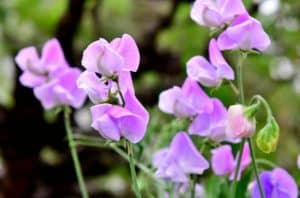
Sweet Pea
Lathyrus odoratus
A fragrant climbing annual loved for its colourful flowers, cottage-garden charm and beautiful cut blooms.

Growing Conditions
|
Requirement |
Details |
|---|---|
|
Water needs |
Average |
|
Soil Moisture |
Moist |
|
Soil type |
|
|
Soil pH |
Alkaline, Neutral |
|
Soil drainage |
Moist but well-drained |
|
Maintenance |
Moderate |
|
RHS Hardiness Rating |
Best Uses
How to Grow and Care for Sweet Pea
Sweet peas (Lathyrus odoratus) are fragrant annual climbing flowers that produce colourful blooms from late spring through summer, often continuing into early autumn with regular picking and deadheading. They’re ideal for growing against trellises, fences and garden arches, and their flowers are excellent for cutting.
How to Plant Sweet Peas
Choose a sunny position with fertile, well-drained soil. Sweet peas grow best when their roots stay cool and moist, so incorporating well-rotted compost before planting can help.
Sow seeds indoors in autumn or late winter, or sow directly outdoors in spring once conditions are suitable. Harden off indoor-grown seedlings before planting them outside.
Provide a trellis, netting or another suitable support at planting time so the young plants have something to climb.
Watering and Feeding
Water regularly during dry weather, particularly once the plants begin flowering. Sweet peas prefer consistently moist soil but shouldn’t sit in waterlogged conditions. A layer of organic mulch can help retain moisture and keep the roots cool.
Once flower buds begin forming, an occasional feed with a potassium-rich liquid fertiliser can support flowering, particularly when sweet peas are grown in containers. Avoid excessive nitrogen-rich feeding, which can encourage leafy growth at the expense of flowers.
Encouraging More Flowers
Pick flowers frequently and remove faded blooms before seed pods develop. This encourages the plants to continue producing flowers.
Tie in wandering stems where necessary and check that the plants have enough support as they grow.
Common Growing Problems
Sweet peas can develop powdery mildew, particularly when plants are stressed by dry conditions. Good airflow, consistent watering and adequate spacing can help reduce problems.
Flowering may also slow during prolonged hot weather.
Learn More About Growing Sweet Peas
For more detailed planting advice, ongoing care and tips for getting the best flowers, read our complete guide to growing sweet peas.
Safety & Toxicity
Sweet peas (*Lathyrus odoratus*) are ornamental plants and should not be eaten. Their seeds are poisonous if consumed and can cause serious health problems, particularly if eaten repeatedly or in large quantities.
Keep sweet pea seeds away from children and pets, and never confuse ornamental sweet peas with edible garden peas (*Pisum sativum*).