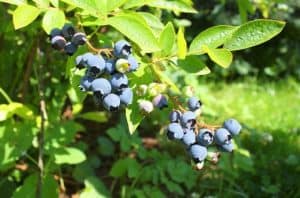
Blueberry
Vaccinium corymbosum
Blueberries are productive, deciduous fruit shrubs that produce sweet, juicy berries in summer. They thrive in acidic soil and can be grown in garden beds or containers, making them a rewarding addition to a fruit garden.

Plant at a Glance
Growing Conditions
|
Requirement |
Details |
|---|---|
|
Water needs |
Average |
|
Soil Moisture |
Moist |
|
Soil type |
Loam, Sand |
|
Soil pH |
|
|
Soil drainage |
Moist but well-drained |
|
Maintenance |
Moderate |
|
RHS Hardiness Rating |
H6 – Hardy (-20 to -15°C) |
Understanding RHS Hardiness Ratings: These ratings indicate the winter temperatures a plant can generally tolerate. However, soil drainage, wind exposure and winter wet can also affect how well a plant survives.
Best Uses
How to Grow and Care for Blueberry
Blueberries (Vaccinium corymbosum) are productive, deciduous shrubs that reward gardeners with sweet summer berries and colourful autumn foliage. They’re particularly well suited to gardens with acidic soil, although they can also grow successfully in containers filled with ericaceous compost.
Planting Blueberries
Choose a sunny, sheltered position with acidic, moisture-retentive but well-drained soil. Blueberries grow best in soil with a pH of approximately 4.5–5.5.
Plant container-grown blueberries in spring or autumn, avoiding frozen or waterlogged ground. If your garden soil is alkaline, grow blueberries in large containers using peat-free ericaceous compost rather than trying to permanently change the soil’s pH.
Watering and Feeding
Blueberries have shallow roots and need consistent moisture, particularly during flowering and fruit development. Water regularly during dry spells, ideally using rainwater where available.
Apply an organic mulch, such as composted pine bark, to help retain moisture and suppress weeds. Keep mulch away from the base of the stems.
Feed established plants with a fertiliser suitable for acid-loving plants when needed, following the manufacturer’s instructions. Avoid excessive feeding.
Pruning Blueberry Bushes
Young blueberry bushes generally need little pruning beyond removing dead, damaged or weak growth.
Once established, prune in late winter while the plants are dormant. Remove some of the oldest, least productive stems to encourage healthy new growth and maintain an open shape.
Harvesting Blueberries
Blueberries usually ripen during summer, although the exact timing depends on the variety and growing conditions.
Pick berries when they’re fully blue and detach easily from the plant. Leaving them for a few days after they change colour can improve their sweetness.
Protect ripening fruit from birds with securely fitted, wildlife-safe netting where necessary.
Winter Care
Established northern highbush blueberries are generally hardy in UK gardens, although young plants and container-grown specimens may need additional protection during prolonged freezing weather.
Move containers into a sheltered position during severe cold and ensure they can drain freely.
Common Growing Problems
Yellowing leaves can indicate that the soil or compost is insufficiently acidic, preventing the plant from absorbing essential nutrients.
Poor fruit production may result from inadequate sunlight, water stress or insufficient pollination. Growing more than one compatible blueberry cultivar can improve yields, although many varieties are self-fertile.