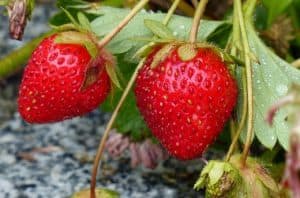
Strawberry
Fragaria × ananassa
Strawberries are easy-to-grow perennial fruit plants that produce sweet, juicy berries throughout summer. Perfect for garden beds, raised beds and containers, they’re a rewarding choice for growing your own fruit.

Growing Conditions
|
Requirement |
Details |
|---|---|
|
Water needs |
Average |
|
Soil Moisture |
Moist |
|
Soil type |
Loam |
|
Soil pH |
Acid, Neutral |
|
Soil drainage |
Moist but well-drained |
|
Maintenance |
Moderate |
|
RHS Hardiness Rating |
H6 – Hardy (-20 to -15°C) |
Understanding RHS Hardiness Ratings: These ratings indicate the winter temperatures a plant can generally tolerate. However, soil drainage, wind exposure and winter wet can also affect how well a plant survives.
Plant Characteristics
Best Uses
How to Grow and Care for Strawberry
Strawberries are relatively easy to grow and can provide delicious homegrown fruit for several years when given the right conditions.
They grow best in a sunny position with fertile, well-drained soil and consistent moisture, particularly during flowering and fruiting. Whether planted in garden beds, raised beds, or containers, regular care will help keep strawberry plants healthy and productive.
Planting Strawberries
Plant strawberries in spring or autumn, spacing them approximately 30–45 cm apart to allow room for growth.
Position each plant so its crown, where the leaves meet the roots, sits level with the soil surface. Planting too deeply can cause crown rot, while planting too shallowly can expose the roots.
Strawberries also grow well in raised beds, containers and hanging baskets.
Watering Strawberries
Keep the soil consistently moist, particularly when plants are flowering and developing fruit.
Water around the base of each plant rather than wetting the leaves and berries, which can encourage fungal diseases.
Container-grown strawberries may need daily watering during hot, dry weather.
Feeding and Mulching
Apply a suitable balanced fertiliser in early spring if the soil needs additional nutrients.
Once flowers appear, a high-potassium feed can support fruit development, especially for plants grown in containers.
Place clean straw around the plants as berries develop. This keeps fruit away from damp soil and helps reduce weeds.
Avoid covering the crowns with mulch.
Managing Strawberry Runners
Strawberry plants produce runners that develop into new plants.
Remove unwanted runners during the growing season to prevent overcrowding and direct more energy towards fruit production.
Alternatively, allow healthy runners to root if you want to grow replacement plants.
Harvesting Strawberries
Most strawberries ripen during summer, although everbearing varieties can produce additional harvests into autumn.
Pick berries when they are fully red and ripe. Harvest regularly, handling the fruit gently to avoid bruising.
For more detailed advice, see our guide to how and when to harvest strawberries.
Winter Care
Established strawberry plants are generally hardy in UK gardens, but prolonged freezing conditions and waterlogged soil can cause damage.
Remove dead or diseased foliage, maintain good drainage and protect container-grown plants during severe frost.
Strawberry plants are usually most productive during their first few years. Replace older plants with healthy runners or new plants when harvests begin to decline.
Growing Guides
 9 Secrets to Growing Great Strawberries
 A Gardener’s Complete Strawberry Variety Guide (+ 5 of The Best for Your Garden)
 Strawberry Harvest: How and When to Pick Strawberries